Choosing the best credit cards in Ireland can feel overwhelming. With dozens of options from traditional banks, credit unions, and fintech providers, how do you know which one truly fits your needs?
Whether you’re a student building credit, a professional seeking rewards, or a business owner managing expenses, the right card matters. Interest rates, fees, and eligibility requirements vary widely across providers.
This comprehensive guide breaks down 24 of Ireland’s top credit cards. We’ll cover personal cards, student options, and business solutions—so you can compare credit cards Ireland-wide and make an informed choice.
You’ll discover which cards offer the best terms for your situation. From low APR options to cashback rewards, we’ve analysed each card’s key features, costs, and application requirements.
Before diving into specific cards, let’s clarify the essential terms you need to know. Understanding APR, fees, and eligibility criteria will help you spot the best credit card deals for your circumstances.
Understanding Credit Card Terms in Ireland
Before you apply for a credit card, familiarise yourself with these essential concepts that impact your costs and borrowing experience.
APR (Annual Percentage Rate): The yearly cost of borrowing, typically ranging from 10-24% in Ireland. A low APR credit card saves money if you carry balances.
Interest-Free Period: Usually 30-56 days on purchases when you pay the full balance. This gives you short-term, interest-free borrowing.
Fees: Credit card fees Ireland-wide include annual fees, cash advance charges, FX fees, and late payment penalties. Check the full fee schedule before applying.
Minimum Payment: Typically 3-5% of your balance monthly. Paying only this amount extends debt repayment significantly and increases total interest paid.
Credit Limit: The maximum you can borrow, determined by income, credit history, and existing debts. Limits often start conservatively and increase with responsible usage.
Balance Transfer: Moving debt from other cards to a new one, often at lower rates. A balance transfer credit card can reduce interest payments substantially, though transfer fees apply.
Personal Credit Cards in Ireland: Top Picks
These cards suit individuals seeking everyday spending solutions, rewards, or low-cost borrowing. We’ve organised them by provider to help you compare offerings.
1. An Post Money — Flex Credit Card
Best for: Flexibility and straightforward terms with trusted Irish brand backing.
Features standard credit facilities with contactless payments and online account management. Specific APR and fees not publicly disclosed—check An Post Money’s website for current rates. Requires Irish residency and acceptable credit history. Apply online or at An Post branches.
2. An Post Money — Classic Credit Card
Best for: Traditional users seeking reliable, no-frills credit.
Offers fundamental credit functionality with purchase protection and contactless technology. Pricing details not publicly available—contact An Post Money directly. Standard eligibility criteria apply. Applications accepted online or in participating branches.
3. AIB — AIB CLICK Visa Card
Best for: AIB customers wanting integrated mobile banking.
Seamlessly integrates with AIB current accounts via the mobile app, with real-time notifications and digital wallet compatibility. Terms vary based on AIB relationship—check their official credit card page. Requires existing AIB relationship. Apply through online banking, mobile app, or branches.
4. Revolut — Revolut Credit Card
Best for: Digital-first users and frequent travellers.
Combines modern fintech features with competitive FX rates and comprehensive spending analytics. Terms not publicly disclosed—check the Revolut app for current rates. Requires existing Revolut account. Apply entirely through the Revolut mobile app.
5-7. Avant Money (Bankinter) — Everyday+, One Card, Reward+
Best for: Daily spending (Everyday+), simplified features (One), or rewards (Reward+).
Avant Money, the Irish brand of Spain’s Bankinter, offers three card tiers targeting different needs. The Reward+ Card features credit card rewards, whilst Everyday+ focuses on routine purchases and One Card provides unified functionality. APR and fee information not publicly available—request details directly from Avant Money. Standard Irish residency and creditworthiness criteria apply. Applications processed through Avant Money’s online platform.
8. Bank of Ireland — Aer Credit Card
Best for: Frequent Aer Lingus flyers.
Co-branded card linking spending to Aer Lingus Avios points. Earn rewards on everyday purchases with bonus Avios on airline purchases. Typically includes annual fee given rewards structure—check Bank of Ireland’s website. Requires Irish residency and acceptable credit. Apply online or at branches.
9-10. Bank of Ireland — Classic & Platinum Advantage
Best for: Bank of Ireland customers (Classic: simplicity; Platinum: premium features).
Classic offers straightforward credit without rewards complexity. Platinum Advantage provides enhanced benefits including potential travel insurance and purchase protection. Platinum cards typically require higher income and stronger credit history. Both integrate with Bank of Ireland’s online and mobile banking. Terms available on their official website.
11-12. AIB — Platinum Visa & ‘be’ Visa
Best for: Premium benefits (Platinum) or digital-first younger users (‘be’).
Platinum Visa offers enhanced features for higher-spending profiles, potentially including travel insurance and concierge services. The ‘be’ Visa targets younger demographics with modern app integration. Platinum requires stronger credit profiles; ‘be’ designed for digital natives. Apply through AIB’s platforms—online banking, app, or branches.
13. PTSB — ICE Visa Credit Card
Best for: Permanent TSB customers seeking cashback.
Historically featured cashback elements on spending—verify current programme with PTSB. Terms not publicly specified on comparison sites. Requires Irish residency and meeting PTSB’s credit criteria. Apply through PTSB’s online platform or branches.
Student Credit Cards in Ireland
Student credit card offers in Ireland provide young adults with accessible credit whilst building financial literacy, typically featuring lower limits and relaxed eligibility.
14-15. Bank of Ireland & AIB — Student Credit Cards
Best for: Third-level students building credit history.
Both Bank of Ireland and AIB offer student-specific cards with lower initial credit limits and educational resources. Often feature reduced or waived annual fees. Require proof of student status (student ID, registration letter), Irish residency, and minimum age of 18. Apply through respective providers’ websites, apps, or campus branches.
Affinity Credit Cards: University Co-Branded Options
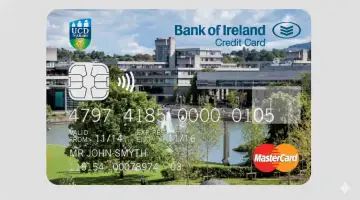
16-17. Bank of Ireland — Trinity College Dublin & UCD Affinity Cards
Best for: University community members and supporters.
Co-branded cards featuring Trinity or UCD branding, with potential university donations from card usage (verify current terms). Open to anyone meeting Bank of Ireland’s credit criteria—not restricted to students or alumni. Standard Bank of Ireland pricing applies. Apply via their affinity cards webpage.
Business Credit Cards in Ireland
A business credit card separates personal and company finances, simplifies expense tracking, and provides tools for managing employee spending. Options range from traditional banking to modern fintech solutions.
Traditional Banking: Corporate Cards
18-20. HSBC, Citi & J.P. Morgan — Enterprise Corporate Cards
Best for: Large corporations with international operations.
These global banking giants offer comprehensive corporate card programmes with multi-currency capabilities, sophisticated expense management, and integration with corporate banking services. Pricing is bespoke based on company size and requirements—not publicly disclosed. Target established businesses with substantial turnover and international presence. Contact respective corporate banking teams directly for applications.
Fintech Solutions: Modern Corporate Cards
21-23. Payhawk, Pliant & Moss — Digital Spend Management
Best for: SMEs and scale-ups prioritising flexibility and automation.
These modern platforms combine corporate cards with expense management software. Features include unlimited virtual cards, real-time tracking, automated receipt capture, accounting integrations, and granular employee spending controls. Subscription-based pricing models with transparent fees—request demos for specific rates. Designed for growing businesses with digital-first operations. Generally easier approval than traditional banks. Applications processed through respective websites with streamlined digital onboarding.
24. AirPlus — Virtual Cards for Travel & Suppliers
Best for: Managing travel and supplier payments.
Specialises in virtual card generation for one-time or recurring payments, particularly strong in travel industry integrations. Pricing varies by usage—contact AirPlus International for Ireland-specific terms. Designed for businesses with regular travel or supplier payment needs. Often accessed through travel management companies or direct corporate arrangements.
How to Choose the Best Credit Card for Your Needs
Selecting from the best credit cards in Ireland requires matching features to your specific situation systematically.
Identify Your Primary Use Case: Paying off debt? Building credit? Earning rewards? Managing business expenses? Your use case determines which features matter—someone seeking a balance transfer credit card prioritises low APR over rewards.
Calculate True Costs: Consider the complete picture: annual fees, cash advances, FX fees, and late penalties. A slightly higher APR with no annual fee might cost less overall. Frequent travellers should prioritise low FX fees.
Assess Eligibility Realistically: Credit card approval depends on credit history, income, and existing debts. Applying beyond your likely approval range results in rejections that temporarily impact your score. Students should focus on student credit card offers; those with established credit can pursue premium cards.
Consider Payment Habits: Pay full balances monthly? APR matters little—focus on rewards and benefits. Carry balances? Prioritise a low APR credit card over rewards.
Evaluate Added Benefits: Premium cards may include travel insurance, purchase protection, or concierge services. For business credit cards, evaluate expense management tools and accounting integrations.
Check FX Policies: If you travel or purchase internationally, FX fees (often 2-3%) add up. Digital providers like Revolut often excel here despite potentially higher interest rates.
The Application Process: What to Expect
Understanding how to apply for a credit card in Ireland increases approval likelihood.
Documentation Required: Proof of identity (passport/licence), proof of address (utility bill), and proof of income (payslips/tax returns). Students need student ID. Businesses require registration documents and financial statements.
Credit Bureau Check: Irish lenders access your report through the Central Credit Register, showing existing commitments, payment history, and defaults. Your credit history significantly influences credit card approval and credit limits offered.
Decision Timeline: Digital providers often provide instant decisions. Traditional banks typically take 5-10 days. Complex corporate applications may require weeks.
Starting Limits: Initial limits are generally conservative, particularly for students or first-time users. Providers review limits periodically and may increase them with responsible usage. Request increases after six months of good history.
Common Pitfalls to Avoid
Only Making Minimum Payments: This extends debt repayment significantly whilst interest accumulates. Pay full balances monthly or substantially more than the minimum.
Cash Advances: Withdrawing cash triggers immediate interest (no interest-free period) plus fees (typically 2-5%). Use debit cards instead.
Ignoring FX Fees: International purchases trigger FX fees on most cards. Check your card’s policy if you regularly transact in foreign currencies.
Multiple Applications Quickly: Each application appears on your credit report. Multiple applications suggest financial distress and reduce approval chances. Research thoroughly and apply strategically.
Conclusion: Making Your Decision
Ireland’s credit card market offers diverse options across personal, student, and business segments. From traditional banking giants like AIB and Bank of Ireland to modern fintech challengers like Revolut and Payhawk, there’s a solution for virtually every need.
The best credit cards in Ireland for you depend on your specific circumstances—spending patterns, credit history, travel frequency, and whether you carry balances. Take time to compare credit cards Ireland-wide, focusing on features that genuinely matter for your situation.
Remember that responsible usage builds credit history and opens doors to better financial products. Pay on time, keep balances manageable, and review your card’s terms periodically to ensure it still serves your needs.
Ready to apply for a credit card? Visit the provider’s official website to verify current terms, ensure eligibility, and begin your application with complete, accurate information.
Where to apply
Flex Credit Card
* You will be redirected to another website.
Classic Credit Card
* You will be redirected to another website.
AIB CLICK Visa Card
* You will be redirected to another website.
Revolut Credit Card
* You will be redirected to another website.
Everyday+ Card
* You will be redirected to another website.
One Card
* You will be redirected to another website.
Reward+ Card
* You will be redirected to another website.
Aer Credit Card
* You will be redirected to another website.
Classic Credit Card
* You will be redirected to another website.
Platinum Advantage Card
* You will be redirected to another website.
AIB Platinum Visa Card
* You will be redirected to another website.
AIB ‘be' Visa
* You will be redirected to another website.
ICE Visa Credit Card
* You will be redirected to another website.
Student Credit Card
* You will be redirected to another website.
AIB Student Visa Card (AIB)
* You will be redirected to another website.
Affinity - Trinity College Dublin
* You will be redirected to another website.
Affinity - University College Dublin (UCD)
* You will be redirected to another website.
HSBC Corporate Card
* You will be redirected to another website.
Citi Corporate Card
* You will be redirected to another website.
J.P. Morgan Commercial Cards
* You will be redirected to another website.
Payhawk Corporate Credit Cards
* You will be redirected to another website.
Pliant Corporate Credit Card
* You will be redirected to another website.
Moss Corporate Credit Card
* You will be redirected to another website.
AirPlus Virtual Cards Classic
* You will be redirected to another website.
Frequently Asked Questions
What is the best credit card in Ireland for beginners?
If you’re new to credit cards, start with a card that has clear fees, a manageable credit limit, and a provider with strong customer support. Compare eligibility, annual fees, and the APR before you apply.
How much does a credit card cost per year in Ireland?
Costs can include an annual fee (some cards have none), interest if you carry a balance, and charges for cash withdrawals or foreign currency spending. Always check the provider’s fee schedule before applying.
Should I choose Visa or Mastercard in Ireland?
In Ireland, both Visa and Mastercard are widely accepted. Your decision usually comes down to the card’s fees, rewards, and benefits rather than the network.
How do you apply for a credit card online in Ireland?
Choose a card, check eligibility requirements, complete the online application, and provide any requested documents (for example proof of identity or income). Approval times vary by provider.
Which credit card offers the best cashback in Ireland?
Cashback offers change often and may have caps or category rules. Compare current cashback rates, annual fees, and any spending thresholds to find the best fit for your habits.